|
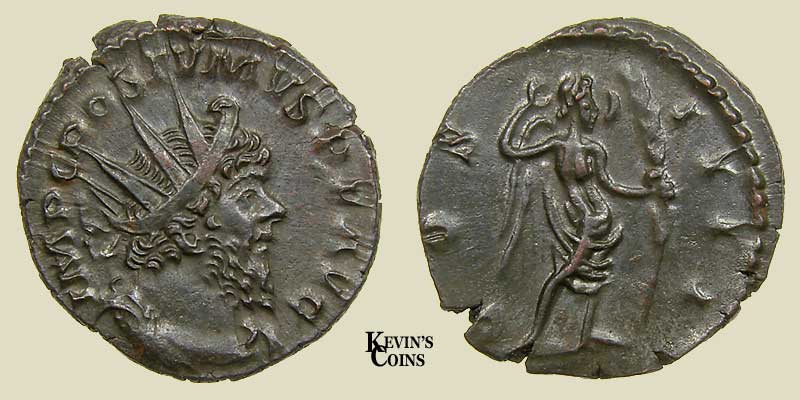
Billon Antoninianus (19mm 3.02g) Struck 267 A.D Gallic mint probably located at Trier
Obv: IMP C POSTVMVS P F AVG Radiate draped bust right
Rev: COS IIII Victory standing right, holding wreath and palm
RIC V ii 287a, Sear 10932
From the Nogent-Sur-Seine (France) hoard of Ants deposited in the early 270's and recovered in 2002.
ex. Dirty Old Coins
The Big Picture: Who was Postumus?
During a chaotic period known as the Crisis of the Third Century, the Roman Empire nearly split apart. Around 260 A.D., a general named Postumus revolted, broke away from Rome, and formed his own "Gallic Empire" (which included modern-day France, Spain, Germany, and Britain).
Even though he was technically a rebel, Postumus viewed himself as a true Roman protecting his territories from Germanic invasions. His coins look completely Roman because he wanted to project stability, authority, and official legitimacy.
The Front (Obverse)
- What you see: A portrait of Postumus looking to the right. He is wearing a spiky crown called a radiate crown (representing the sun's rays). In Roman currency, this crown was the shorthand symbol that told people, "Hey, this is an antoninianus (a double-denomination coin)!"
- The Latin Inscription: IMP C POSTVMVS P F AVG
- What it means: Imperator Caesar Postumus Pius Felix Augustus. It uses all the traditional titles of a supreme Roman Emperor: Commander (Imperator), Duty-Bound (Pius), Fortunate (Felix), and Majestic (Augustus).
The Back (Reverse)
- What you see: Victory (the Roman goddess Nike) standing and holding a celebratory wreath and a palm branch.
- The Latin Inscription: COS IIII
- What it means: Consul Quartum (Consul for the fourth time). This is a date marker! Because Postumus took on the role of consul for his fourth term in 267 A.D., we know exactly when this specific coin was stamped at the mint (likely in Trier, modern-day Germany). Featuring the goddess Victory was classic wartime propaganda, reminding his citizens that he was successfully keeping rival tribes and Roman rivals at bay.
3. Cool Fact: The Coin's Modern Journey
According to the site's records, this specific coin was found in 2002 as part of the Nogent-Sur-Seine hoard in France. Someone buried a large treasure trove of these coins in the early 270s A.D.—likely to protect their savings during wartime or a sudden invasion—and it stayed safely hidden in the dirt for over 1,700 years!
|