
|
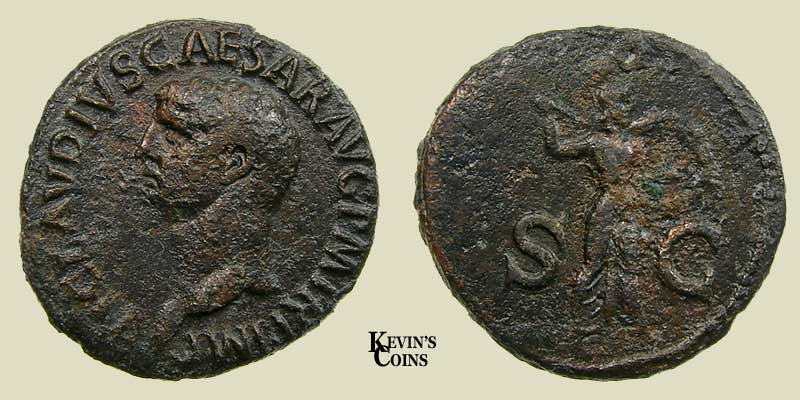
Claudius Obv: TI CLAVDIVS CAESAR AVG P M TR P IMP Barehead left Rev: S C Minerva advancing left, brandishing spear and holding a sheild VM-17 RIC 100 Sear 1861 |
|
This coin is a copper as (a standard everyday coin in ancient Rome) minted during the reign of the Emperor Claudius. To understand why this coin looks the way it does, we have to look at the massive drama happening in Rome when it was made! 1. The Accidental EmperorThe front (obverse) shows the bare head of Claudius. Before becoming emperor in AD 41, nobody took Claudius seriously. He had a limp, a stutter, and his own family kept him hidden away because they thought he was embarrassing. But then, his nephew—the wildly unpopular and chaotic Emperor Caligula—was assassinated by his own guards. The guards were running through the palace, found Claudius hiding behind a curtain, and instead of killing him, they declared him the new Emperor! Because he came to power through a bloody coup and had zero military experience, Claudius used coins like this as a PR campaign to show the public that he was a strong, legitimate leader. 2. Minerva: The Ultimate Symbol of StrategyThe back (reverse) features Minerva, the goddess of wisdom and strategic warfare, charging forward with a shield and a spear. Choosing Minerva was a brilliant political move by Claudius:
3. Playing Nice with the SenateIf you look closely at the back, you will see two large letters: S C. This stands for Senatus Consulto, which means "By Decree of the Senate." While the Emperor had absolute power over gold and silver coins, copper and bronze coins traditionally required the Senate's approval. By prominently featuring "S C," Claudius was extending an olive branch to the Roman Senate, trying to show them respect after his predecessor, Caligula, spent years terrorizing them. |

